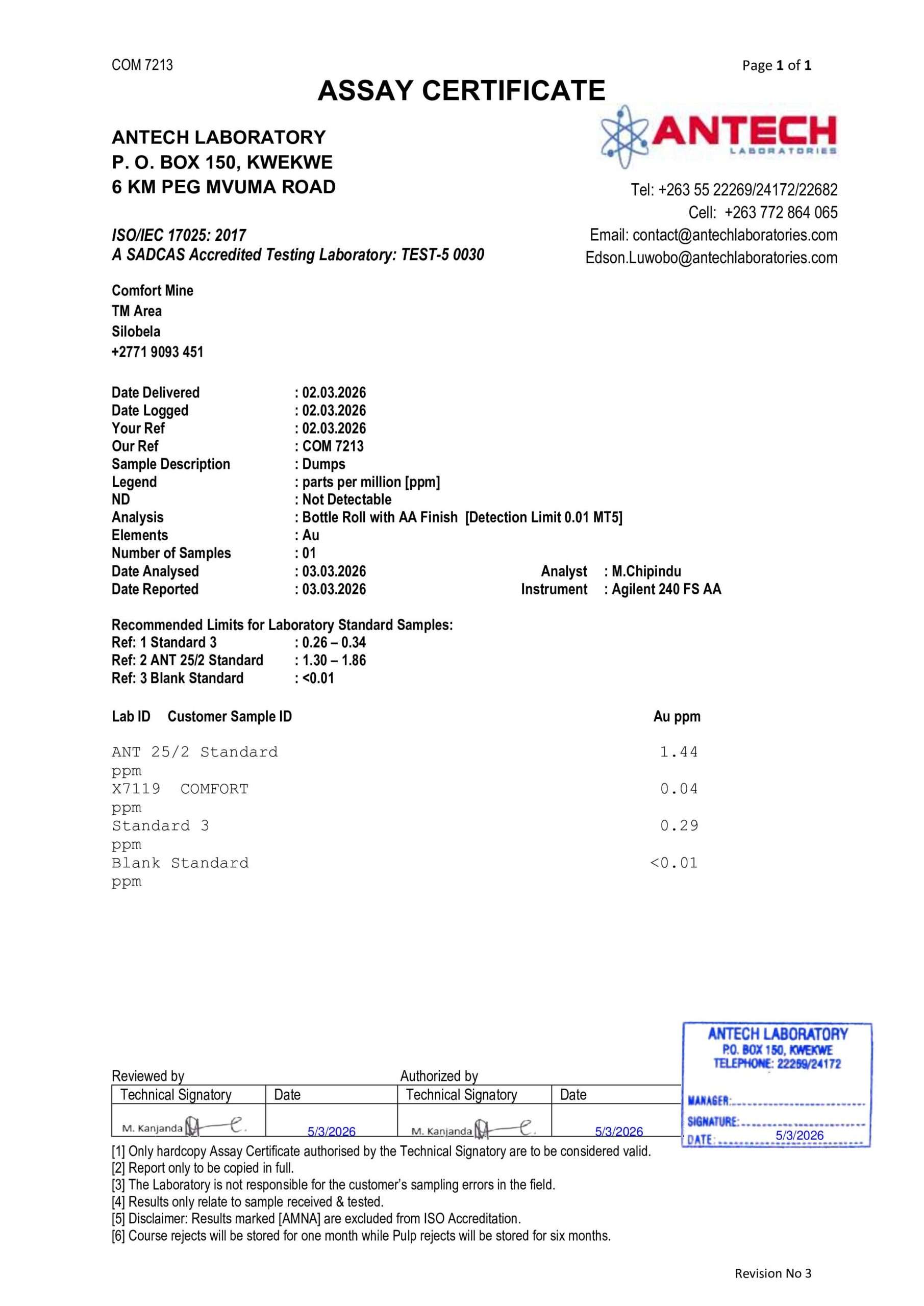
Strategic Tailings Recovery Partnerships With Regional Milling Centers
Strategic Tailings Recovery Partnerships
As part of the planned 200TPD Gold Recovery Processing Plant, the project is developing strategic partnerships with small-scale gold milling centers operating within the surrounding artisanal mining regions of Zimbabwe. The initiative focuses on recovering additional gold values from historical tailings and residual sands generated through basic artisanal processing methods.
Historical Tailings & Untapped Gold Recovery Potential
Many small-scale milling centers within the region process ore for artisanal miners using basic recovery systems that primarily target free-milling gold. As a result, large volumes of residual sands and tailings containing remaining recoverable gold values have accumulated over many years and are currently regarded as waste material. These historical sand dumps represent a significant opportunity for advanced secondary gold recovery processing.
Advanced Ball Mill & CIP Recovery Solution
Our recovery strategy is focused on partnering with regional milling operations to process historical tailings and sand dumps through advanced Ball Mill and Carbon-in-Pulp (CIP) recovery systems designed to maximize gold extraction efficiency. Through centralized processing infrastructure, the project aims to recover additional gold values remaining within previously discarded material while creating long-term value from underutilized mineral resources.
Regional Milling Center Partnership Network
Initial discussions have already been conducted with multiple milling center owners, and partnership agreements have been established based on a proposed 10% participation structure linked to recovered gold from processed dump material. The broader target area contains more than 30 active milling centers located within an estimated 45km radius of the project site, representing substantial long-term feedstock supply potential for the planned centralized recovery operation.
Tailings Sampling & Laboratory Testing Program
To support technical evaluation and recovery assessment, dump sampling and laboratory testing have already been conducted on selected tailings obtained from five milling centers located within approximately 20km of the project site. Samples were submitted for bottle roll testing and fire assay analysis to evaluate residual gold recovery potential and provide technical data supporting the proposed recovery model.
Laboratory Reports & Technical Documentation
This section will include detailed technical information related to each tailings dump, including site images, dump information, laboratory bottle roll results, fire assay reports, recovery assessments, and downloadable PDF laboratory documentation to support investor review and technical due diligence.
Scalable Tailings Recovery Investment Opportunity
The project presents a scalable regional tailings recovery opportunity supported by existing milling partnerships, laboratory-tested dump material, and long-term feedstock availability within an active artisanal mining region. Through advanced processing infrastructure and strategic collaboration with local milling centers, the initiative aims to transform previously discarded tailings into economically recoverable gold resources while supporting sustainable expansion of the overall recovery ecosystem.
Tailings Recovery Assessment — Hlohlo Mine, Tshokotshe Milling Area


Tailings Recovery Assessment — Hlohlo Mine Milling Area
Location
Approximately 9km from the planned processing site
Summary
Laboratory analysis was conducted on historical vat leached tailings obtained from the Hlohlo mine milling area to evaluate the remaining gold recovery potential within the dump material. The tailings were previously processed using cyanide leaching methods commonly applied by small-scale milling operations within the region.
Bottle roll and fire assay laboratory testing identified the presence of residual gold values remaining within the tailings material, confirming the potential for additional recovery through advanced processing systems such as Ball Mill and Carbon-in-Pulp (CIP) technology.
Laboratory Results:
Bottle Roll Resuts
0.68 g/t Au
Fire Assay Results
2.34 g/t Au
Technical Observation
The variance between bottle roll and fire assay results suggests that a portion of the gold may remain locked within the material and not fully recoverable through conventional cyanide leaching alone. This recovery gap is commonly associated with historical tailings and may indicate the presence of:
- Coarse gravity gold
- Quartz-associated gold
- Sulphide-associated gold
- Gold encapsulated within oxidized material
Tailings Recovery Opportunity:
Historical Dump Recovery Potential
The dump material forms part of a broader regional tailings recovery strategy focused on reprocessing historical sands accumulated over several years by artisanal and small-scale milling operations. These historical dumps represent potential long-term feedstock sources for the planned centralized 200TPD recovery plant.
The project continues to evaluate multiple dump sites through laboratory testing, sampling, and technical analysis to determine recovery suitability and support future processing expansion plans.
Download Laboratory Reports
Tailings Recovery Assessment — Nsingo Mine, TM Milling Area
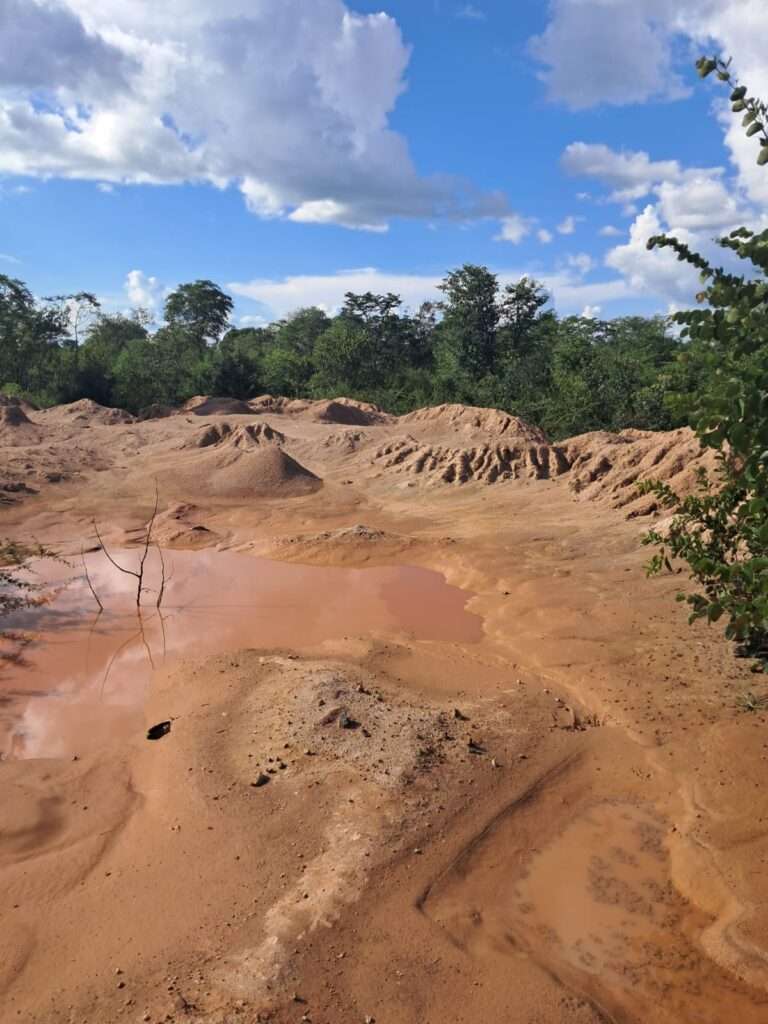
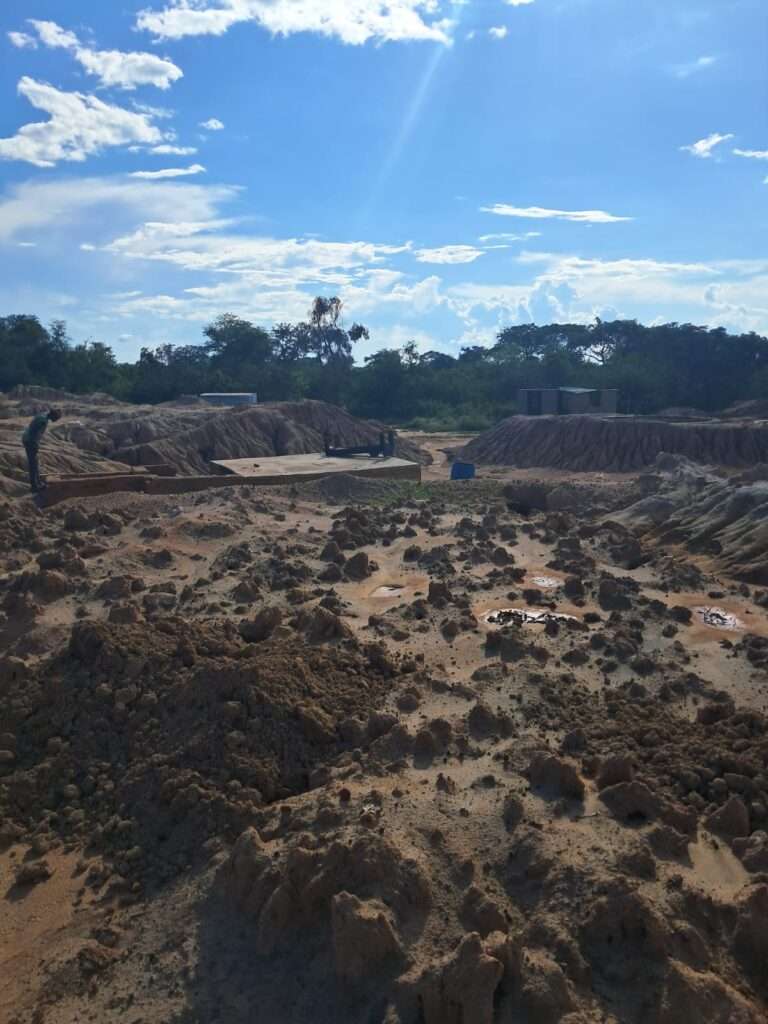

Tailings Recovery Assessment — Nsingo Mine, TM Milling Area
Location
Approximately 17km from the planned processing site
Summary
Laboratory analysis was conducted on historical vat leached tailings obtained from the Nsingo mine, TM milling area to evaluate the remaining gold recovery potential within the dump material. The tailings were previously processed using cyanide leaching methods commonly applied by small-scale milling operations within the region.
Bottle roll and fire assay laboratory testing identified the presence of residual gold values remaining within the tailings material, confirming the potential for additional recovery through advanced processing systems such as Ball Mill and Carbon-in-Pulp (CIP) technology.
Laboratory Results:
Bottle Roll Resuts
0.35 g/t Au
Fire Assay Results
0.99 g/t Au
Technical Observation
The variance between bottle roll and fire assay results suggests that a portion of the gold may remain locked within the material and not fully recoverable through conventional cyanide leaching alone. This recovery gap is commonly associated with historical tailings and may indicate the presence of:
- Coarse gravity gold
- Quartz-associated gold
- Sulphide-associated gold
- Gold encapsulated within oxidized material
Tailings Recovery Opportunity:
Historical Dump Recovery Potential
The dump material forms part of a broader regional tailings recovery strategy focused on reprocessing historical sands accumulated over several years by artisanal and small-scale milling operations. These historical dumps represent potential long-term feedstock sources for the planned centralized 200TPD recovery plant.
The project continues to evaluate multiple dump sites through laboratory testing, sampling, and technical analysis to determine recovery suitability and support future processing expansion plans.
Download Laboratory Reports
Tailings Recovery Assessment — Zuma Mine, Khoza Milling Area


Tailings Recovery Assessment — Zuma Mine, Khoza Milling Area
Location
Approximately 22km from the planned processing site
Summary
Laboratory analysis was conducted on historical vat leached tailings obtained from the Zuma mine, Khoza milling area to evaluate the remaining gold recovery potential within the dump material. The tailings were previously processed using cyanide leaching methods commonly applied by small-scale milling operations within the region.
Bottle roll and fire assay laboratory testing identified the presence of residual gold values remaining within the tailings material, confirming the potential for additional recovery through advanced processing systems such as Ball Mill and Carbon-in-Pulp (CIP) technology.
Laboratory Results:
Bottle Roll Resuts
0.31 g/t Au
Fire Assay Results
2.98 g/t Au
Technical Observation
The variance between bottle roll and fire assay results suggests that a portion of the gold may remain locked within the material and not fully recoverable through conventional cyanide leaching alone. This recovery gap is commonly associated with historical tailings and may indicate the presence of:
- Coarse gravity gold
- Quartz-associated gold
- Sulphide-associated gold
- Gold encapsulated within oxidized material
Tailings Recovery Opportunity:
Historical Dump Recovery Potential
The dump material forms part of a broader regional tailings recovery strategy focused on reprocessing historical sands accumulated over several years by artisanal and small-scale milling operations. These historical dumps represent potential long-term feedstock sources for the planned centralized 200TPD recovery plant.
The project continues to evaluate multiple dump sites through laboratory testing, sampling, and technical analysis to determine recovery suitability and support future processing expansion plans.
Download Laboratory Reports
Tailings Recovery Assessment — Mpofini Mine, Tshokotshe Milling Area


Tailings Recovery Assessment — Mpofini Mine, Tshokotshe Milling Area
Location
Approximately 9km from the planned processing site
Summary
Laboratory analysis was conducted on historical vat leached tailings obtained from the Mpofini Mine, Tshokotshe milling area to evaluate the remaining gold recovery potential within the dump material. The tailings were previously processed using cyanide leaching methods commonly applied by small-scale milling operations within the region.
Bottle roll and fire assay laboratory testing identified the presence of residual gold values remaining within the tailings material, confirming the potential for additional recovery through advanced processing systems such as Ball Mill and Carbon-in-Pulp (CIP) technology.
Laboratory Results:
Bottle Roll Resuts
0.09 g/t Au
Fire Assay Results
1.18 g/t Au
Technical Observation
The variance between bottle roll and fire assay results suggests that a portion of the gold may remain locked within the material and not fully recoverable through conventional cyanide leaching alone. This recovery gap is commonly associated with historical tailings and may indicate the presence of:
- Coarse gravity gold
- Quartz-associated gold
- Sulphide-associated gold
- Gold encapsulated within oxidized material
Tailings Recovery Opportunity:
Historical Dump Recovery Potential
The dump material forms part of a broader regional tailings recovery strategy focused on reprocessing historical sands accumulated over several years by artisanal and small-scale milling operations. These historical dumps represent potential long-term feedstock sources for the planned centralized 200TPD recovery plant.
The project continues to evaluate multiple dump sites through laboratory testing, sampling, and technical analysis to determine recovery suitability and support future processing expansion plans.
Download Laboratory Reports
Tailings Recovery Assessment — Comfort Mine, TM Milling Area
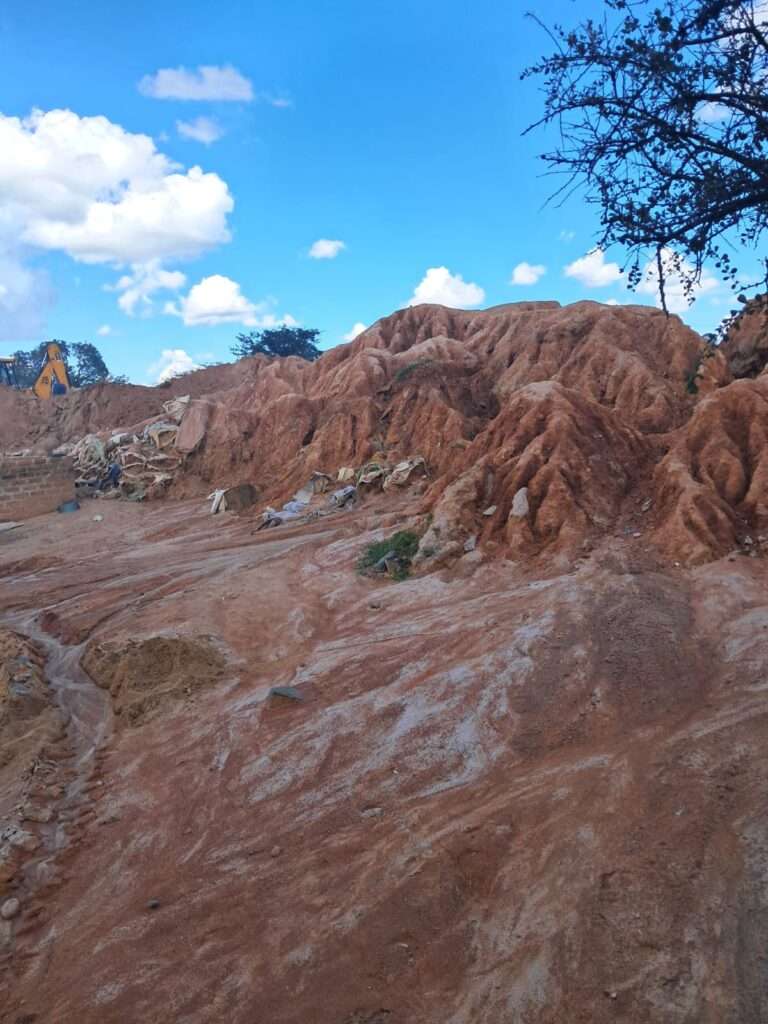


Tailings Recovery Assessment — Comfort Mine, TM Milling Area
Location
Approximately 21km from the planned processing site
Summary
Laboratory analysis was conducted on historical vat leached tailings obtained from the Comfort Mine, TM milling area to evaluate the remaining gold recovery potential within the dump material. The tailings were previously processed using cyanide leaching methods commonly applied by small-scale milling operations within the region.
Bottle roll and fire assay laboratory testing identified the presence of residual gold values remaining within the tailings material, confirming the potential for additional recovery through advanced processing systems such as Ball Mill and Carbon-in-Pulp (CIP) technology.
Laboratory Results:
Bottle Roll Resuts
0.04 g/t Au
Fire Assay Results
0.33 g/t Au
Technical Observation
The variance between bottle roll and fire assay results suggests that a portion of the gold may remain locked within the material and not fully recoverable through conventional cyanide leaching alone. This recovery gap is commonly associated with historical tailings and may indicate the presence of:
- Coarse gravity gold
- Quartz-associated gold
- Sulphide-associated gold
- Gold encapsulated within oxidized material
Tailings Recovery Opportunity:
Historical Dump Recovery Potential
The dump material forms part of a broader regional tailings recovery strategy focused on reprocessing historical sands accumulated over several years by artisanal and small-scale milling operations. These historical dumps represent potential long-term feedstock sources for the planned centralized 200TPD recovery plant.
The project continues to evaluate multiple dump sites through laboratory testing, sampling, and technical analysis to determine recovery suitability and support future processing expansion plans.
Download Laboratory Reports